SEO has come a long way since entering keywords on a web page. Today, search engines will only return results that offer helpful content, relevant inquiries, and interesting parts that help make a fantastic user experience. Images, infographics, custom graphics, and any other type of visual content are also key in keeping visitors engaged and increasing dwell time on a webpage. Google takes into account things such as user interaction, page experience, and content quality, among other metrics. Good visuals make the material easier to understand, more readable, and help make your point. Businesses can produce pages that meet users’ needs and enhance their SEO performance by utilizing effective graphic design and valuable content.
Why Graphic Design Matters for Modern SEO
Nowadays, SEO is not just about written content and keywords. Search engines now consider how useful, engaging, and easy a webpage is for visitors. A graphic designer can help achieve these goals with high-quality graphic design to make the content more attractive, understandable, and enjoyable to read. Good visualizations can also make it easier for the end user to navigate the website and locate the desired information promptly, which results in better performance of the web pages on the website.
User Experience (UX):
- Logical layouts, good graphics, and illustrations make pages easier to navigate.
- Graphics break up large blocks of text, improving readability.
- Having a good user experience will help visitors stick around longer and look at more pages.
Helpful Content:
- Images, charts, and infographics help to explain complex topics.
- Visual content supports written information instead of replacing it.
- Effective images serve content by providing more easily understandable answers to users’ queries.
Search Intent:
- Often, people want to know about something right away to understand.
- Appropriate graphics help explain things consistently with users’ expectations.
- Visually pleasing content makes better sense to meet the searcher’s intentions and enhances the overall user experience.
Content Quality:
- Image graphics add credibility and enhance the look of a website.
- Content with good visuals is more engaging and memorable.
- Consistent branding and clear design create trust with visitors, encouraging longer visits and higher engagement, which are positive signals for modern SEO.
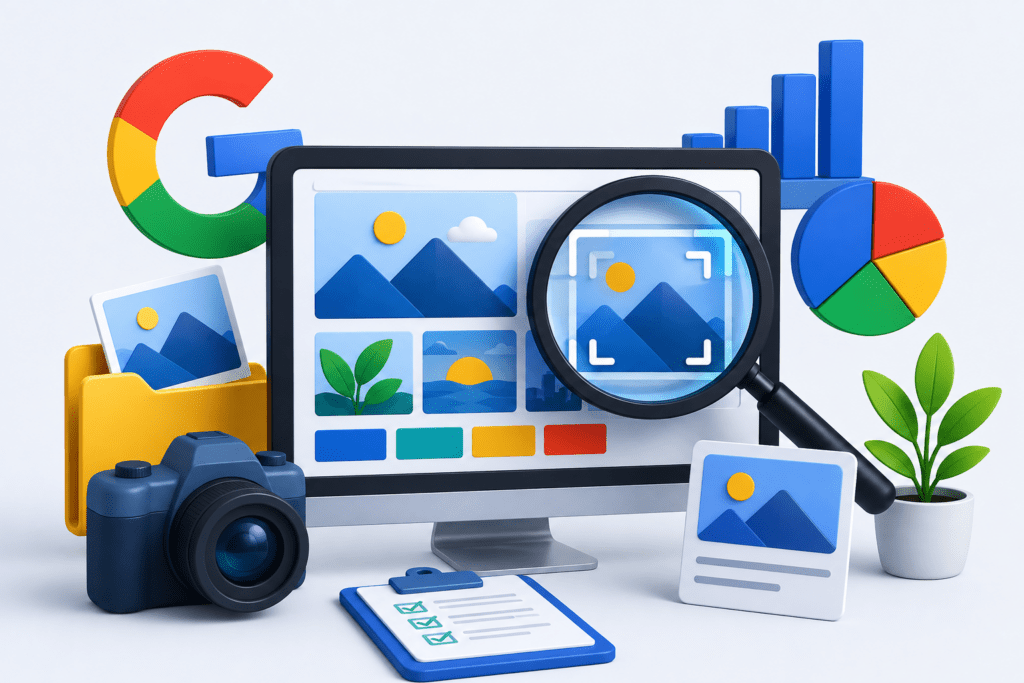
How Google Evaluates Visual Content
On-page video content that enhances understanding, user experience, and relates to the page’s main topic is useful and important for Google. When using images and graphics with words, they should never replace the words; they should always enhance them. Good visuals can convey information at a glance and create a satisfying browsing experience for visitors.
Relevant Images:
Images should be related to the topic and the text. They enable readers to absorb ideas more rapidly, engage readers, and make content more meaningful. Each picture should have a definite function and add value to the page.
Original Graphics:
Original graphics show expertise and make original content in order to stand out from their competitors. By producing custom visuals, illustrations, and original charts, your message will be more engaging than relying on third-party images and graphics, as this will reinforce credibility, trust, and content value to your customers.
Helpful Diagrams:
Helpful diagrams simplify complex processes, comparisons, or workflows into easy-to-understand visuals. They allow readers to absorb information more quickly, reduce confusion, and improve learning. Clear diagrams enhance user satisfaction while supporting the main written explanation.
Infographics:
Infographics combine text, icons, and visuals to present detailed information in a simple format. Well-designed infographics improve readability, encourage sharing, and help users understand statistics or step-by-step information without overwhelming them with large paragraphs.
Proper Image Placement:
Images should appear close to the text they explain so readers can easily connect visuals with information. Proper placement improves page flow, prevents confusion, and creates a smoother reading experience that keeps users engaged throughout the content.
Mobile Responsiveness:
Visuals should automatically adapt to different screen sizes without losing quality or readability. Mobile-friendly images improve loading performance, ensure a better browsing experience, and help users easily view content on smartphones, tablets, and desktop devices.
Accessibility:
Accessible visuals include descriptive alt text, clear labels, and sufficient contrast for all users, including those using screen readers. Accessibility improves usability, supports inclusive design, and helps search engines better comprehend the purpose and context of images.
Ways Graphic Design Improves User Engagement
Strong graphic design makes a webpage more engaging, easier to understand, and enjoyable to explore. These improvements encourage positive user behavior, which can indirectly support better SEO Services in Spain performance by showing search engines that visitors find the content useful.
Better First Impressions:
Visitors form an opinion about a webpage within seconds. Clean layouts, attractive visuals, and consistent branding create a professional appearance that builds trust immediately. A positive first impression encourages users to continue browsing, increasing engagement signals that support overall SEO performance.
Longer Time on Page:
High-quality graphics, illustrations, and infographics keep visitors interested while they read. Visual content breaks up long sections of text and makes information easier to consume. When users spend more time on a page, it signals that the content is valuable and relevant.
Lower Bounce Rate:
Engaging visuals encourage users to explore the content instead of leaving immediately. Easy-to-read designs, relevant images, and clear page structure improve navigation and maintain visitor interest. Lower bounce rates indicate a better user experience, which indirectly benefits search visibility.
Easier Content Understanding:
Graphics simplify complex ideas through charts, icons, diagrams, and illustrations. When readers understand information quickly, they are more likely to finish the content and interact with additional pages. Better comprehension improves user satisfaction and strengthens content quality signals.
Improved Mobile Experience:
Responsive graphic design ensures images, icons, and layouts display correctly on smartphones and tablets. Mobile-friendly visuals improve readability, reduce frustration, and create a smoother browsing experience. Satisfied mobile users are more likely to stay longer and engage with the website.
Increased Social Sharing:
Eye-catching graphics and informative infographics are more likely to be shared across social media venues and other websites. Increased sharing expands content reach, attracts new visitors, and can generate valuable backlinks, helping strengthen a website’s overall SEO authority over time.
Graphic Design Elements That Help SEO
High-quality visual elements play an important role in improving user experience and supporting SEO Services in Ireland performance. High-quality images make webpages more engaging, easier to read, and visually appealing while encouraging visitors to stay longer. Original photos build authenticity and trust by showcasing real products, services, or team members instead of generic stock images. Custom illustrations simplify complex ideas, create a unique brand identity, and make information easier to understand. Professional visuals, including branded graphics, icons, charts, and banners, improve readability, maintain design consistency, and strengthen credibility. Together, these visual elements enhance content quality, increase user engagement, and help create a positive experience that supports better search engine rankings.
Image File Names:
Use clear, descriptive image file names that accurately reflect the visual content. Search engines use file names as an additional signal to understand what an image is about, making them important for image SEO. Keep file names concise, relevant, and keyword-focused without overusing keywords. Separate words with hyphens, avoid random numbers or generic names, and rename every image before uploading it. Well-structured file names improve image indexing, enhance content relevance, and support better overall SEO performance.
Alt Text Best Practices:
Alt text (alternative text) is a short description that allows search engines and assistive technologies to understand the purpose of an image. Writing effective alt text improves accessibility, provides context, and supports image SEO without affecting the user experience.
Accessibility: Alt text enables screen readers to describe images for users with visual impairments, making your website more inclusive and easier to navigate.
Context: Write alt text that clearly explains what the image shows and how it correlates to the surrounding content. Accurate descriptions help both users and search engines understand the image’s purpose.
Natural Keywords: Include relevant keywords only when they naturally fit the description. Avoid keyword stuffing, as the primary goal of alt text is to describe the image while supporting overall SEO accurately.
Responsive Images
Responsive images automatically adapt to various screen sizes, ensuring a constant and high-quality viewing experience across all gadgets. They improve usability, page performance, and overall user satisfaction, which indirectly supports SEO.
Desktop: Images should display in high quality without appearing stretched or oversized. Proper sizing maintains a professional look while supporting fast page loading.
Tablet: Images should adapt smoothly to medium-sized screens, preserving readability and layout without requiring users to zoom or scroll unnecessarily.
Mobile Optimization: Images should resize correctly for smartphones, load quickly, and remain clear on smaller screens. Mobile-friendly visuals improve user experience, reduce loading delays, and support better search performance.
Graphic Design Best Practices for Higher Rankings
Design for users first: Create visuals that improve understanding, answer user needs, and provide a better browsing experience before focusing on search engine optimization.
Keep layouts clean: Use a well-organized layout with clear sections and logical spacing so visitors can easily find and read information.
Maintain visual consistency: Apply consistent colors, fonts, icons, and design components throughout the website to create a professional and trustworthy appearance.
Use readable typography: Choose easy-to-read fonts, appropriate font sizes, and sufficient line spacing to improve readability across all devices.
Optimize color contrast: Ensure strong contrast between text and background to improve visibility, accessibility, and the overall user experience.
Use whitespace effectively: Leave enough space around text, images, and design elements to reduce clutter and make content easier to scan.
Compress images: Reduce image file sizes while maintaining quality to improve page loading speed and website performance.
Optimize for mobile: Make sure images and formats automatically adjust to diverse screen sizes for a smooth mobile browsing experience.
Maintain branding consistency: Use the same logo, color palette, typography, and visual style across all pages to strengthen brand recognition.
Add descriptive captions where useful: Include image captions when they provide additional context or help users better understand the accompanying visual.
Key Takeaways
Graphic design and AI SEO Services work together to create a better experience for both users and search engines. High-quality visuals, responsive design, optimized images, and consistent branding improve engagement, readability, and accessibility. By combining valuable written content with effective graphic design, businesses can build stronger search visibility and long-term organic growth.
FAQs
1. Does graphic design improve SEO?
Yes. Good graphic design enhances user experience, engagement, and content readability, which can indirectly support better SEO performance.
2. Why are images important for SEO?
Relevant and optimized images help users understand content better and improve image search visibility.
3. What is image alt text?
Alt text is a short description of an image that improves accessibility and helps search engines understand its content.
4. How do responsive images benefit SEO?
Responsive images display correctly on all devices, improving user experience and mobile performance.
5. Should I use original graphics instead of stock images?
Original graphics provide unique value, strengthen brand identity, and make content more engaging.
6. Can infographics help website rankings?
Yes. Informative infographics improve readability, increase user engagement, and may encourage backlinks and social sharing.