GEO targeting in PPC advertising means showing ads to people based on their geographic location, such as a country, state, city, or specific area. Location matters because customer needs, preferences, purchasing behavior, and search intent often vary from one region to another. By targeting the right locations, businesses can connect with audiences who are more likely to need their products or services. Geographic targeting also helps reduce wasted ad spend by preventing ads from reaching irrelevant areas, allowing businesses to use their budgets more efficiently. This can improve click-through rates, conversions, and overall campaign performance.
What Is GEO Targeting in PPC Advertising?
GEO targeting in PPC advertising, or pay per click, is a customization feature that allows paid ads to be seen on the basis of their geographic position. Businesses can decide on specific geographic locations where their target audience is likely to be present, such as living, working, or searching. Location is used to identify ads that are likely relevant to a user, as platforms like Google Ads rely on location signals, including the device location, IP address, and other available information.
AI PPC Services can target audiences at various geographic levels, such as a country, state/region, city, a zip/postal code, or a specific radius around a location.
Why GEO Targeting Matters for PPC Campaigns
GEO targeting is a crucial aspect of generating more focused and effective PPC campaigns. Rather than ad campaigns that target a wide mass, enterprises can target wherever they’re offering their products or services. This is particularly useful for small businesses, service businesses, and enterprises in targeted industries. Geographic targeting will help businesses design more locale-relevant advertising campaigns as well as streamline targeting budgets and make informed decisions based on location-specific results.
Better Audience Relevance
By targeting audiences that are more likely to need their product or services, GEO targeting can help businesses results. For instance, a plumbing company can scatter advertising material on the streets of cities or service areas that it can service without producing waste.
- Reaches customers in relevant locations
- Supports local customer needs
- Makes ad messaging more specific
More Efficient Ad Spending
PPC budgets can quickly be wasted when ads reach people outside a business’s service area. Geographic targeting allows advertisers to limit impressions and clicks from locations that are not valuable to the campaign.
- Reduces irrelevant clicks
- Helps control advertising costs
- Allows budgets to focus on profitable areas
Higher Conversion Potential
When ads reach people in the right location, they are more likely to match the customer’s immediate needs. A person searching for a nearby service may already have strong purchase intent, making location-based targeting useful for generating leads and sales.
- Connects ads with local demand
- Supports stronger purchase intent
- Can increase leads and conversions
Improved Local Visibility
GEO targeting can help businesses become more visible in the areas they serve. Local advertising allows companies to promote specific offers, services, and locations to nearby customers who may be searching for solutions.
- Builds awareness in target areas
- Supports local customer acquisition
- Helps businesses compete in selected markets
Better Campaign Performance Analysis
Geographic targeting also provides useful insights into where campaigns perform best. Advertisers can compare clicks, conversions, costs, and other metrics across different locations and adjust their strategies accordingly.
- Identifies high-performing locations
- Reveals areas with weak results
- Helps optimize future PPC campaigns based on real data
How to Build an Effective GEO-Targeted PPC Strategy
AI PPC Company starts with understanding where your most valuable customers are located. Rather than targeting large areas without a clear purpose, businesses should use customer data, campaign results, and market insights to identify locations with the strongest potential. Once these areas are identified, campaigns can be structured around geographic performance. This approach allows advertisers to create more relevant ads, allocate budgets wisely, and adjust bidding strategies according to local demand. A well-planned strategy also makes it easier to measure results and continuously improve PPC performance.
Identify Your Most Valuable Locations
The first step is to determine which geographic areas contribute the most value to your business. Review existing customer and PPC data to understand where leads, purchases, and revenue are coming from. Look beyond the number of clicks because a location generating many clicks may not necessarily produce quality customers.
Consider customer demographics, average order value, purchasing behavior, and demand for your products or services. Locations with strong conversion rates and higher revenue may deserve greater advertising attention. Similarly, areas with low engagement or poor conversion rates may need reduced spending or further testing.
Segment Campaigns by Location
Once valuable locations are identified, consider creating separate campaigns or ad groups for important geographic markets. This gives advertisers greater control over budgets, bids, messaging, and performance tracking.
For example, a business serving several cities can allocate different budgets based on each city’s conversion performance. High-performing areas may receive higher bids, while weaker locations can be monitored with smaller budgets.
Use Location-Specific Keywords
AI PPC Consultant campaigns reach users who are actively searching for products or services in a particular area. Adding geographic terms to keywords can provide stronger local intent because the searcher is often looking for a nearby business or provider. For example, searches such as “PPC services in New York,” “digital marketing agency in Fairfax,” and “emergency plumber near me” indicate that location may influence the user’s decision.
These keywords can help businesses connect with people who are further along in the buying journey. Instead of reaching a broad audience, advertisers can focus on searches that clearly indicate a need for a service within a specific area.
Create Localized Ad Copy
Localized ad copy makes PPC advertisements more relevant to people in the targeted area. When appropriate, businesses can mention a city, neighborhood, or specific service area directly in the headline or description. This helps users quickly understand that the business serves their location. Ad messaging should also reflect local customer needs.
Clear and relevant calls to action are equally important. Phrases such as “Book Local Service,” “Get a Free Quote,” or “Schedule Service Today” can encourage users to take the next step.
Optimize Landing Pages for Each Location
The landing page should provide a consistent experience after someone clicks a localized PPC ad. Businesses can create dedicated location pages for important cities, regions, or service areas instead of sending every visitor to a generic homepage. Each page should clearly explain the available services and include useful local information. Businesses can mention the location served, relevant services, customer testimonials, operating details, and contact information.
Most importantly, the landing page should match the advertisement. If an ad promotes a specific service in a particular city, the landing page should immediately confirm that service and location.
Using Location Bid Adjustments to Improve PPC Performance
Location bid adjustments allow advertisers to increase or decrease bids based on geographic performance. This helps businesses spend more on locations that generate better results. High-performing cities or regions can receive higher bids to improve ad visibility and capture more valuable customers. On the other hand, advertisers can reduce bids for areas with low conversions or high costs.
These decisions should be based on performance data, including clicks, conversions, cost per lead, and return on ad spend. AI Digital Advertising helps businesses use their PPC budget more efficiently and improve overall campaign results.
Measuring the Success of GEO-Targeted PPC Campaigns
Measuring GEO-targeted PPC performance helps advertisers understand which locations are delivering valuable results. Instead of looking at overall campaign numbers, businesses can compare performance by city, region, ZIP code, or other targeted areas. This makes it easier to identify profitable locations and improve budget allocation.
Conversion Rate: Shows the percentage of visitors who complete a desired action, such as making a purchase or submitting a form. Higher conversion rates can indicate stronger local intent.
Cost Per Conversion: Measures how much it costs to generate each lead or customer. Lower costs generally indicate more efficient spending.
Click-Through Rate (CTR): Shows how often people click an ad after seeing it. A strong CTR can indicate that the ad is relevant to the targeted location.
Return on Ad Spend (ROAS): Compares advertising costs with the revenue generated. It helps identify locations that provide stronger financial returns.
Cost Per Click (CPC): Shows the average amount paid for each click. Comparing CPC across locations can reveal expensive or affordable markets.
Revenue by Location: Shows which geographic areas generate the most sales or revenue, helping businesses prioritize valuable markets.
Lead Quality by Location: Measures whether leads from specific areas are genuinely interested and likely to become customers.
Advertisers can compare these metrics across locations to identify high- and low-performing areas. Based on the results, they can adjust bids, budgets, keywords, ads, or landing pages.
Advanced GEO Targeting Strategies for Better Results
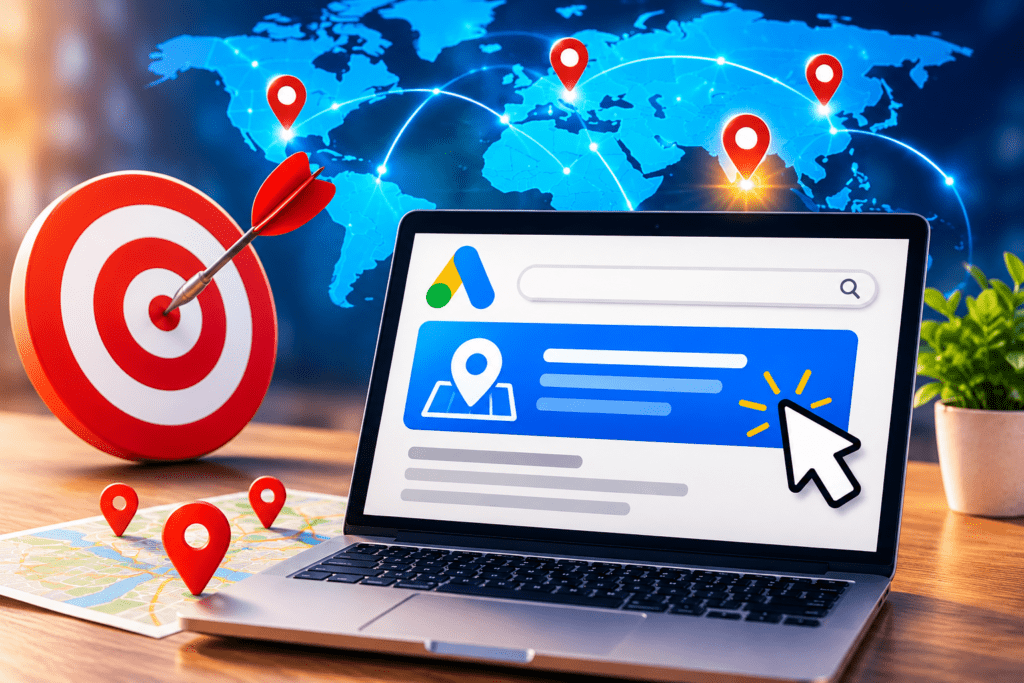
Advanced GEO targeting techniques help advertisers make PPC campaigns more precise and responsive to local customer behavior. By combining geographic data with audience, device, timing, and environmental signals, businesses can focus their advertising budget on the areas and situations most likely to generate results.
Radius Targeting
Radius targeting allows businesses to show ads within a specific distance from a location. It works well for local businesses such as restaurants, clinics, repair services, and retail stores.
ZIP/Postal-Code Targeting
Advertisers can target selected ZIP or postal codes to reach specific neighborhoods or service areas. This is useful when customer demand varies between nearby locations.
Location-Based Audience Segmentation
Businesses can divide audiences according to their locations and create different messages, offers, or bidding strategies for each group.
Weather-Based Targeting
Weather-based targeting can be useful for businesses affected by weather conditions. For example, an HVAC company may increase advertising during extreme temperatures, while an umbrella retailer may promote products during rainy periods.
Mobile-Focused Local Campaigns
Mobile targeting is valuable because people often search for nearby businesses while traveling or making immediate purchasing decisions. Location-focused mobile ads can support calls, directions, and quick inquiries.
Dayparting Combined with Location Targeting
Advertisers can schedule ads based on both location and time. For example, a restaurant could increase bids in nearby areas during lunch and dinner hours.
Excluding Low-Value Geographic Areas
Removing locations that consistently produce poor results can reduce wasted spending. Regular performance analysis helps advertisers identify areas that should receive lower bids or be excluded completely.
FAQs
What is GEO targeting in PPC advertising?
GEO targeting means showing PPC ads to people based on their geographic location. Businesses can target countries, states, cities, ZIP codes, or specific areas around a location. This helps advertisers reach customers in relevant service areas and avoid spending money on audiences they cannot serve.
How does GEO targeting improve PPC campaign performance?
GEO targeting improves PPC performance by focusing advertising on relevant locations. It can reduce wasted ad spend, improve traffic quality, and increase conversion opportunities. Businesses can also compare results across locations and adjust budgets, bids, and ads based on performance.
Can small businesses benefit from GEO-targeted PPC campaigns?
Yes, small businesses can benefit significantly from GEO targeting. It allows them to focus limited advertising budgets on nearby customers and specific service areas. Local targeting can help generate more relevant clicks, calls, visits, and leads while reducing unnecessary spending.
What locations can be targeted through PPC advertising?
Advertisers can target countries, states, regions, cities, ZIP or postal codes, and specific areas using radius targeting. They can also exclude locations that are outside their service area or consistently produce poor campaign results.
How often should GEO-targeted PPC campaigns be optimized?
GEO-targeted PPC campaigns should be reviewed regularly, such as weekly or biweekly. However, major changes should be made only after collecting enough performance data. Advertisers should monitor conversions, costs, clicks, and revenue to make informed location-based adjustments.