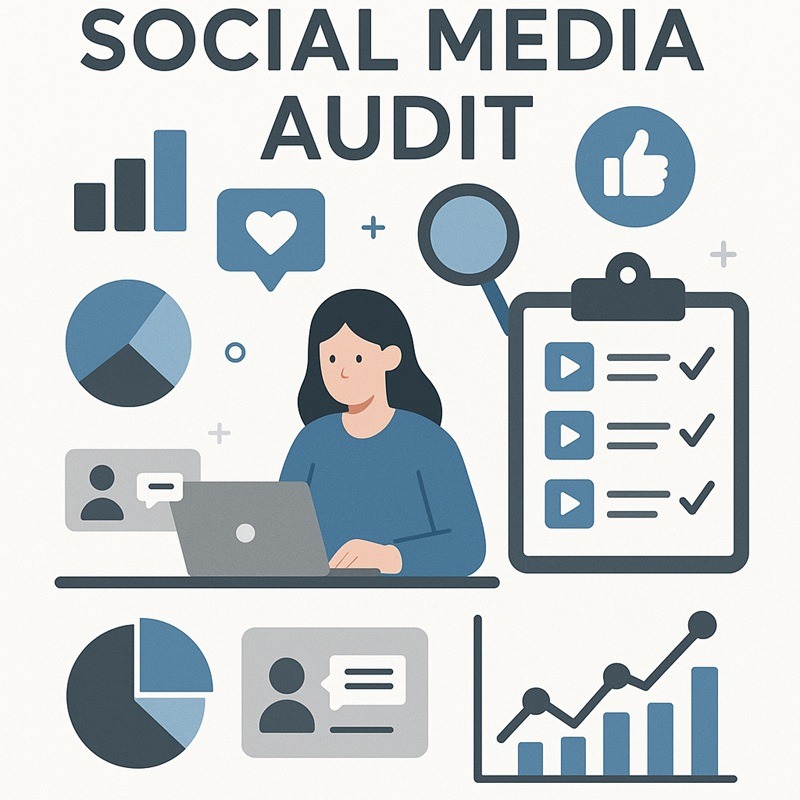
Social media is not only a way to promote your business, but it is the face of your brand to the public. It does not matter if your business is a small local or multinational corporation – social media is critical in helping build relationships, advertise services, and generate revenue. However, managing active social media activities isn’t enough. To succeed, one must know what is working, what is not, and what can be better. It is here that a social media audit comes into the picture.
What Is a Social Media Audit?
Social media audit checklist is a systematic examination of your company’s social media presence, performance, and strategies. The aim is to assess each platform’s effectiveness and determine if your efforts work for your business purposes. Think of it as a social media health checkup. It includes the evaluation of different metrics, including the rate of follower growth, engagement rate, content performance, consistency in branding, and the congruence with the marketing objectives. A great audit gives you a workable insight into adjusting your strategy to produce more ROI and better online impressions.
Why Is a Social Media Audit Important?
1. Identifies What’s Working and What’s Not
With so many social platforms, such as Facebook, Instagram, Twitter/X, LinkedIn, TikTok, and YouTube, it is easy to scatter your efforts. An audit will help you identify the platforms that are bearing fruit and those that are trailing behind. This will help you concentrate on areas that best use your resources.
2. Line up Strategy with Business Goals
Are your social media efforts helping you achieve other business goals like lead generation, brand awareness, client engagement, or sales growth? Evaluate social media performance to determine whether your stick approach and outreach strategy are bringing forth the desired results or your efforts in social media marketing are all going down the drain.
3. Improves Content Quality and Consistency
Maintaining reliability in branding, voice, and visuals is important when gaining trust and familiarity. An audit assurance that your logos, bios, tone, and messaging are consistent across all platforms. Improve social ROI also helps classify the types of content that resonate best with your audience—be it videos, carousels, infographics, or behind-the-scenes posts.
4. Increases ROI on Social Media Efforts
If you cannot understand what content performs best and where your audience is most engaged, your ad and created content may not exist. A social media audit enables you to optimize performance by carrying out high-impact strategies that you should embrace and discard dead strategies.
5. Keeps You Ahead of the Competition
Social media engagement tips are constantly evolving. A regular audit helps you keep up with new features, trends, and algorithm changes. It also allows you to benchmark your performance against competitors and identify areas where you can differentiate your brand.
Key Components of a Social Media Audit
A comprehensive social media audit typically includes the following components:
1. Account Review
- List all social accounts your business owns (including those that may be inactive or unofficial).
- Verify usernames, bios, and profile information for accuracy and consistency.
- Check branding elements like profile photos, cover images, and link integrations.
2. Performance Metrics
Evaluate platform-specific analytics, such as:
- Follower count and growth rate
- Engagement rate (likes, comments, shares)
- Reach and impressions
- Click-through rate (CTR) on links
- Video views and completion rates
- Conversion metrics (leads, sales, sign-ups)
3. Audience Analysis
Understand who your audience is on each platform:
- Demographics (age, gender, location)
- Interests and behaviors
- When they are most active
- Engagement patterns
4. Content Evaluation
- What types of content get the most engagement?
- Which posts performed poorly, and why?
- Are you using a mix of formats (images, stories, reels, live streams)?
- Is your content calendar consistent and aligned with business goals?
5. Competitor Benchmarking
- Identify your main competitors on each platform.
- Analyze their content strategy, frequency, tone, and engagement.
- Pinpoint gaps and opportunities where your brand can outperform them.
6. SWOT Analysis
A SWOT analysis can provide a strategic overview:
- Strengths: High-performing content, engaged community
- Weaknesses: Inconsistent posting, low engagement
- Opportunities: New platforms, untapped audience segments
- Threats: Competitor growth, algorithm changes
How to Conduct a Social Media Audit in 6 Steps
Step 1: Compile All Social Media Profiles
List every official and unofficial profile your business has. Look for outdated or abandoned accounts that need to be updated or shut down.
Step 2: Gather Data
Collect performance data using platform analytics tools like Meta Business Suite, LinkedIn Analytics, Twitter/X Analytics, and third-party tools like Hootsuite, Sprout Social, or Buffer.
Step 3: Analyze Metrics
Evaluate engagement, reach, follower growth, and conversions. Compare month-over-month or quarter-over-quarter to identify trends.
Step 4: Evaluate Branding and Voice
Ensure consistency in profile pictures, bios, links, hashtags, and tone. This will strengthen brand identity and build trust.
Step 5: Assess Content Strategy
Review your content calendar, frequency, visuals, and messaging. Identify top-performing content and the platforms where it thrives.
Step 6: Take Action
Create a report summarizing findings and outline actionable steps such as:
- Retiring underperforming platforms
- Investing more in high-ROI channels
- Refreshing branding
- Adjusting posting schedules
- Experimenting with new content formats
How Often Should You Conduct a Social Media Audit?
While there’s no one-size-fits-all answer, most businesses benefit from conducting a social media audit quarterly. Monthly audits may be more appropriate for fast-moving industries or companies that heavily rely on digital marketing. At the very least, conduct a yearly comprehensive audit to keep your strategy current and effective.
Final Thoughts
A strong social media presence can make or break a business in the digital era. A social media audit provides the clarity and direction needed to make informed decisions, sharpen your strategy, and increase your return on investment.
Whether you’re launching a new product, rebranding, or simply wanting to stay competitive, a social media audit equips you with the insights needed to move forward confidently. Don’t treat your social channels as static billboards—treat them as dynamic assets that deserve regular evaluation and improvement.
Frequently Asked Questions (FAQs)
1. How often should I perform a social media audit?
A social media audit should be conducted quarterly. However, depending on your business size and activity level, monthly or biannual audits can also be effective to ensure you stay on track with your goals and adapt to changes quickly.
2. What tools can help with a social media audit?
Popular tools include Google Analytics, Meta Business Suite, Sprout Social, Hootsuite, Buffer, SocialBee, and SEMrush. These tools can help track engagement, audience demographics, content performance, and competitor benchmarks.
3. How long does a social media audit take?
The time required depends on the number of platforms you’re using and the depth of the analysis. A basic audit can take a few hours, while a comprehensive audit may take several days.
4. What should I do after completing a social media audit?
After an audit, use your findings to adjust your strategy. This might include changing your content calendar, improving your visuals, retiring underperforming platforms, or increasing ad spend on successful channels.
5. Can I do a social media audit, or should I hire a professional?
Small businesses can often conduct audits themselves using online tools and templates. However, hiring a social media strategist or digital marketing agency can provide deeper insights and strategic recommendations for larger or more complex operations.
6. What is the difference between social media and content audits?
A social media audit evaluates your performance across social platforms, including engagement, reach, and platform-specific strategies. A content audit, on the other hand, focuses specifically on analyzing the quality, type, and effectiveness of your published content.
7. Why is consistency across platforms important in a social media audit?
Consistency builds brand trust and recognition. During an audit, logos, bios, messaging, or tone inconsistencies can indicate the need for a brand refresh or more straightforward guidelines.
8. Can a social media audit help improve ROI?
Yes. By identifying what content and platforms drive the most engagement and conversions, a social media audit allows you to focus your efforts on high-ROI activities, reducing wasted time and budget.
Ready to Audit Your Social Media?
Start today. Assess your current situation, analyze your data, and implement changes that drive real results. Your audience and your bottom line will thank you.