The travel sector is among the busiest areas on the web in today’s digital landscape. Thousands of travel blogs, tour companies, and destination websites compete each day for the same target audience. Without search engine optimization, your travel website may as well not exist to the unsuspecting travelers actively looking for destinations, guides, and experiences.
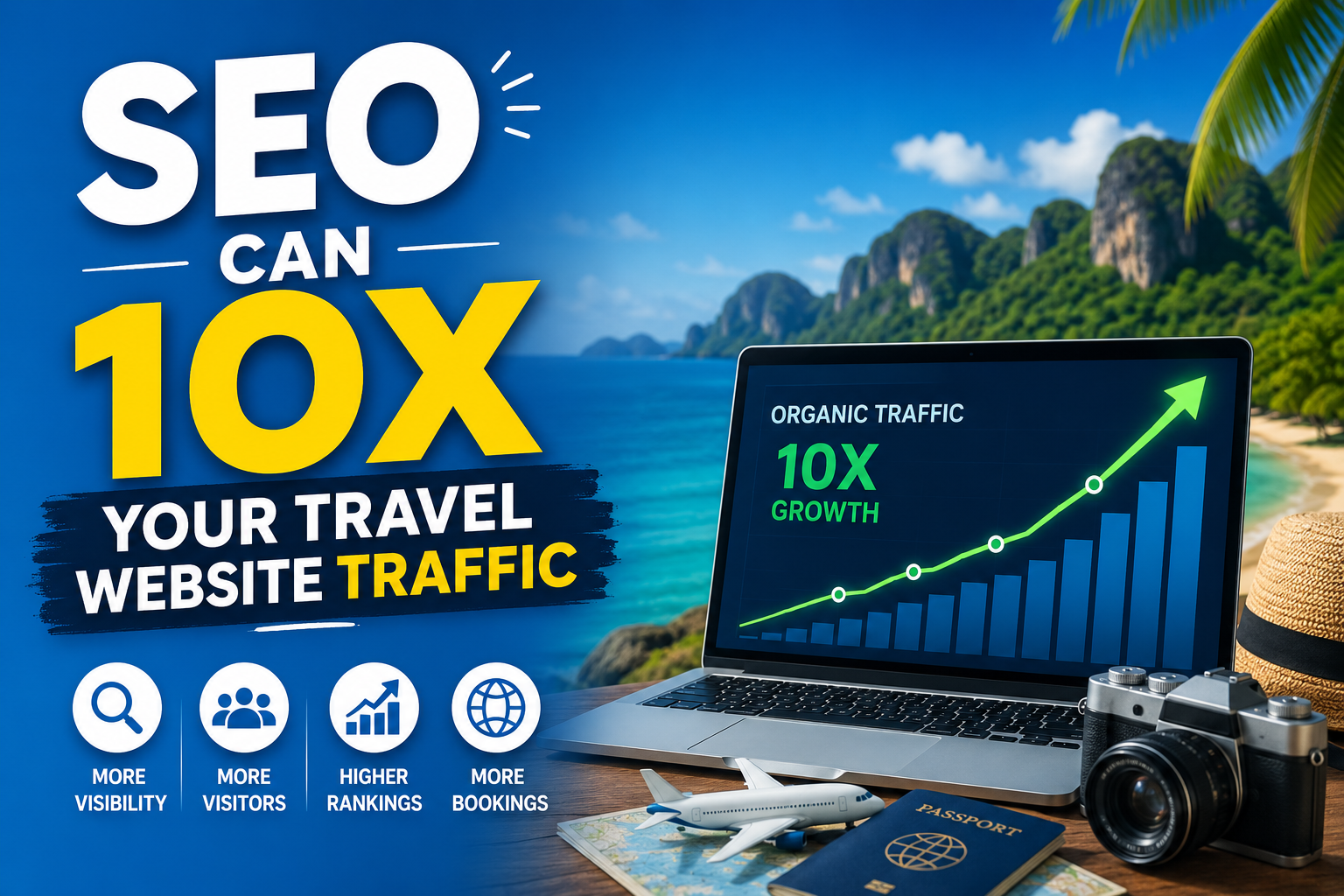
Search Engine Optimization (SEO) is no longer simply a marketing strategy; it’s the lifeline of any sustainable traffic growth. When implemented correctly, SEO can lead to multiple times the organic traffic, more bookings, and set up your travel brand as an authority in your niche. Well, if SEO is done properly, it can easily increase your travel website’s traffic by 10x in the long run without spending a fortune on ads.
Why SEO Matters for Travel Websites
Search engines are a major factor in deciding where people travel. When people need tips on where to go next, those tips will typically range from ‘best places to visit in Bali’ to ‘cheap hotels in Paris’ or ‘local tour guides in NYC,’ and they’ll usually turn to Google. For instance, if your site is on the first page, you get constant, high-intent, targeted traffic. Otherwise, you lose visitors to the competitors.
SEO helps you:
- Rank higher on Google for travel-related keywords
- Attract free, organic traffic daily
- Build long-term visibility without paid ads
- Increase trust and credibility among travelers
Boosting visibility for NYC tour operators turns out to be evergreen as compared to social media traffic. A high-ranking blog post can provide traffic for months and years.
Keyword Research: The Foundation of Travel SEO
The first step in a successful SEO strategy is keyword research. Travel sites must target key phrases which do match real users’ intent.
For example:
- Informational: “best time to visit Switzerland.”
- Transactional: “cheap Maldives tour packages.”
- Local intent: “NYC walking tour guide near Central Park.”
Good keyword research helps you know what travelers are actually searching for.
Key strategies:
- Attention on long-tail keywords (e.g., “budget travel guide for Italy in winter”)
- Use location-based keywords
- Target seasonal travel trends
- Analyze competitors’ ranking keywords
Some important keyword types for travel SEO:
- Destination guides
- Travel tips
- Hotel and flight comparisons
- Itinerary planning keywords
Highly targeted visitors are more likely to convert and can be reached with the right keywords.
On-Page SEO: Optimizing Every Page for Rankings
Local SEO for travel guides in Manhattan is all about optimizing the content and structure of your website so search engines can easily understand it.
For travel websites, on-page SEO plays a huge role in ranking destination pages and blog posts.
Important elements include:
- Title tags with keywords
- Meta descriptions that attract clicks
- Proper heading structure (H1, H2, H3)
- Internal linking between travel blogs
- Image optimization with alt text
Well-structured content not only helps search engines but also improves user experience.
For example, a blog titled “Best Beaches in Goa” should include:
- Clear sections for each beach
- Travel tips and the best time to visit
- Maps or location details
- Internal links to related guides
The more helpful your content is, the higher it ranks.
Technical SEO: Making Your Website Search-Friendly
1. Foundation of Technical SEO
Technical SEO is the backbone of a website’s search performance. It helps search engines crawl, index, and understand your website properly. Unlike content SEO, it focuses on backend improvements that support better rankings and user experience.
2. Key Optimization Factors
Important elements include website speed, mobile responsiveness, HTTPS security, and clean URL structure. A fast-loading and mobile-friendly website improves user engagement and reduces bounce rates. XML sitemaps and robots.txt files guide search engines to the right pages while blocking unnecessary ones.
3. Advanced SEO Enhancements
Structured data (schema markup) helps search engines understand your content better and enables rich search results. Fixing broken links, removing duplicate content, and improving site architecture also strengthen overall SEO performance.
4. Final Impact
Technical SEO ensures your website is fast, secure, and easy to crawl. It builds a strong foundation for long-term organic growth and better search visibility.
Content Strategy: The Heart of Travel SEO
Digital marketing for New York tourism businesses are the backbone of travel SEO success. It focuses on creating valuable, engaging, and destination-specific content that answers traveler queries. By targeting the right keywords, blogs, guides, and itineraries attract organic traffic and improve rankings. High-quality visuals, storytelling, and user-focused information build trust and keep visitors engaged. Consistent content updates help search engines recognize authority, making travel websites more visible, competitive, and appealing to potential travelers searching online.
Local SEO for Travel Guides and Tour Operators
1. Importance of Local SEO in Travel Industry
Local SEO helps travel guides and tour operators appear in searches made by nearby or location-based travelers. It increases visibility for people searching “near me” services, driving more direct bookings and inquiries.
2. Google Business Profile Optimization
A well-optimized Google Business Profile is essential. It should include accurate location, contact details, business hours, photos, and customer reviews. Regular updates improve trust and local search rankings.
3. Local Keywords and Content Targeting
Using location-specific keywords like “city tours,” “local sightseeing,” or “guided tours in [city]” helps attract targeted traffic. Blog posts, landing pages, and guides focused on specific destinations improve discoverability.
4. Reviews and Online Reputation
Positive reviews build credibility and influence booking decisions. Encouraging satisfied customers to leave feedback boosts local rankings and trust.
5. Final Impact
Local SEO ensures travel businesses connect with nearby travelers, increase visibility, and generate more bookings through targeted and location-based search strategies.
Link Building: Building Authority in the Travel Industry
Link building is a powerful SEO strategy that helps travel websites gain authority and improve search rankings. By earning backlinks from trusted travel blogs, tourism websites, and local directories, your site becomes more credible in the eyes of search engines. Quality matters more than quantity, so focus on relevant and high-authority sources. Guest posting, partnerships, and shareable travel content, such as guides and itineraries, can naturally attract links, boosting visibility and long-term organic traffic.
Tracking Performance and Analytics
1. Importance of Analytics in SEO
Tracking performance and analytics is essential to understanding how your SEO efforts are working. It helps you measure traffic, user behavior, and conversions, allowing data-driven decisions for better results.
2. Key Metrics to Monitor
Important metrics include organic traffic, bounce rate, click-through rate (CTR), keyword rankings, and conversion rate. These indicators show how well your website is attracting and engaging visitors.
3. Tools for Performance Tracking
Tools like Google Analytics and Google Search Console help monitor website performance, index status, and search visibility. They also identify errors, broken links, and indexing issues.
4. Improving Strategy with Data
By analyzing data regularly, you can identify what content performs best and what needs improvement. This helps refine keywords, update content, and improve user experience.
5. Final Impact
Consistent tracking ensures your SEO strategy stays effective, helping your website grow steadily in search rankings and attract more qualified traffic over time.
How SEO 10X Growth Actually Happens
SEO does not bring instant results, but its compounding effect is extremely powerful when done consistently. Over time, well-optimized content builds authority, earns backlinks, and starts ranking for multiple keywords simultaneously. This is where real long-term growth begins.
At the core of this growth is a simple but powerful cycle. One high-quality blog starts ranking in search engines and brings in daily organic traffic. As more users visit, engagement signals improve, and the page gains more trust and authority. Travel website SEO experts in Brooklyn increase a website’s authority, helping other pages on the same site rank faster and higher.
Here’s how the growth multiplies step by step:
One blog ranks → starts bringing consistent daily traffic
That traffic signals quality → search engines trust the site more
More trust → new pages rank faster and easier
More rankings → visibility expands across hundreds of keywords
More visibility → exponential increase in organic traffic
This is how travel websites, blogs, and service-based businesses scale from 100 visitors per day to 1,000, 10,000, and beyond over time. SEO growth is not linear—it compounds like a snowball effect, where every piece of content strengthens the next.
FAQs
1. Does SEO give instant results?
No, SEO is a long-term strategy. It takes time for content to rank, but once it does, it delivers consistent and compounding traffic.
2. What is meant by SEO compounding effect?
It means one ranking page helps build authority, which in turn helps other pages rank faster, creating continuous traffic growth over time.
3. How many blogs are needed for SEO growth?
There is no fixed number. Even a few high-quality, well-optimized blogs can start generating steady traffic and improve overall site authority.
4. Why does traffic increase over time in SEO?
As more pages rank and gain backlinks, search engines trust your website more, which increases visibility and organic traffic.
5. Can small websites also achieve 10X SEO growth?
Yes, even small websites can grow significantly if they consistently publish optimized, valuable, and keyword-focused content.